Looking for certain cancers early
Screening tests are used in people without symptoms. Which tests are recommended depends on age, risk, history, and current guidance.
Awareness in action
Screening is used for certain cancers in people who do not have symptoms. Symptoms are changes a person notices. Neither should be interpreted without professional context.
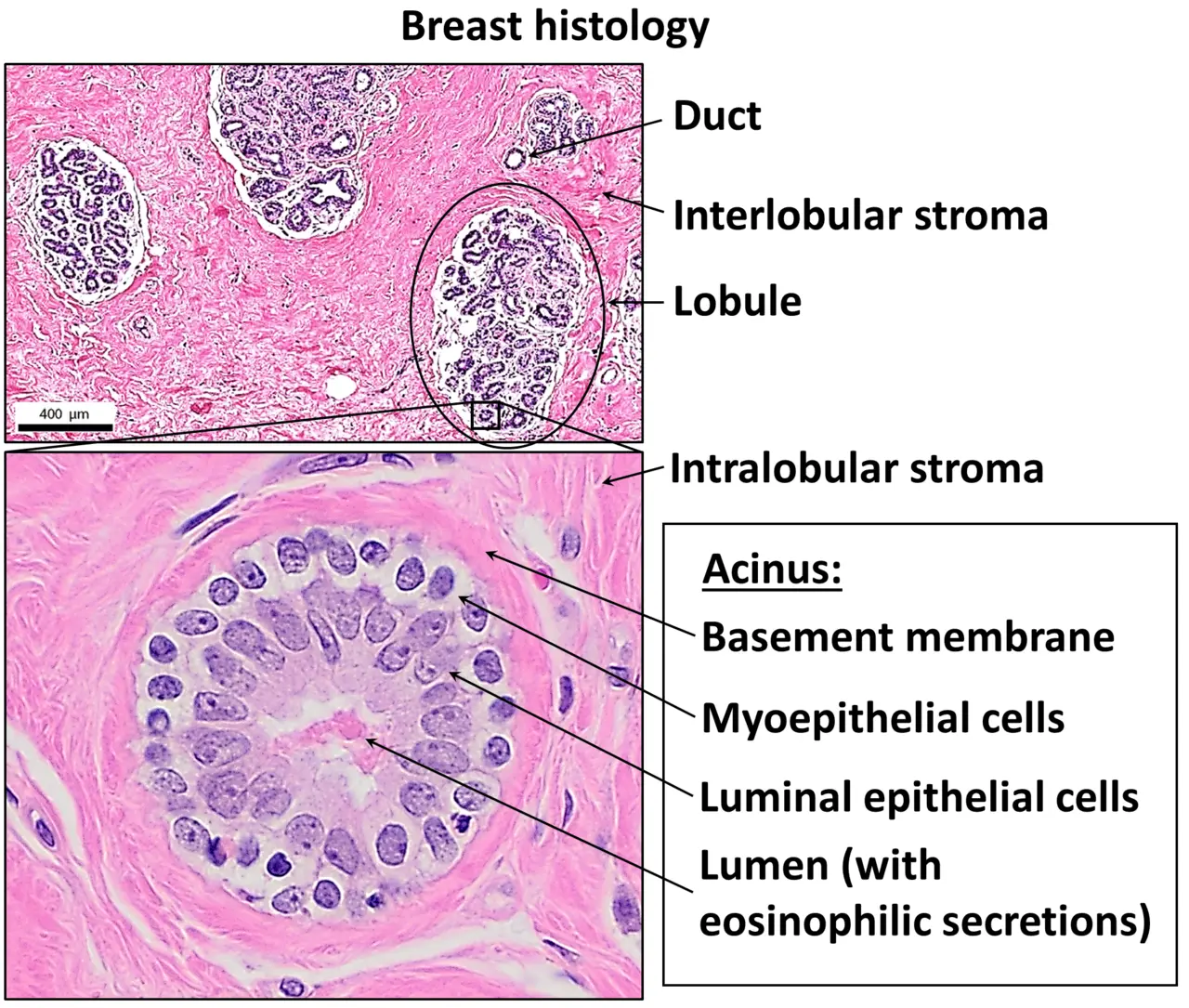
A microscopy reference can teach anatomy, but this website image is not a screening test.
CC BY 4.0 · Rights ↗
Screening uses validated tests and clinical guidance—not visual comparison with a web image.
CC BY-SA 3.0 · Rights ↗Useful awareness avoids two extremes: ignoring a lasting change and assuming every change is cancer.
01 / DIFFERENT STARTING POINTS
Screening tests are used in people without symptoms. Which tests are recommended depends on age, risk, history, and current guidance.
Symptoms can have many causes. A lasting or concerning change deserves evaluation rather than self-diagnosis.
02 / WHAT SCREENING CAN DO
Established screening tests exist for certain cancers, not every cancer. A screening result is not always a diagnosis. An abnormal result may lead to additional tests, while a normal result cannot guarantee that cancer is absent.
Benefits and possible harms differ by test. Timing depends on factors such as age, personal history, family history, and other risks. A health professional can help apply current guidance to an individual.
03 / HOW TO THINK ABOUT A CHANGE
Cancer can cause many different symptoms, but those symptoms are often caused by other health conditions. What matters is noticing changes that persist, worsen, feel unusual, or concern you and discussing them with a qualified health professional.
Online information cannot tell you what a symptom means. If something has not improved after a few weeks—or feels urgent—tell a trusted adult and seek professional medical care.
04 / THE NEXT STEP
SOURCES / LEARN MORE
General education only. Cellwear does not recommend personal screening schedules, identify the cause of symptoms, or provide emergency care.