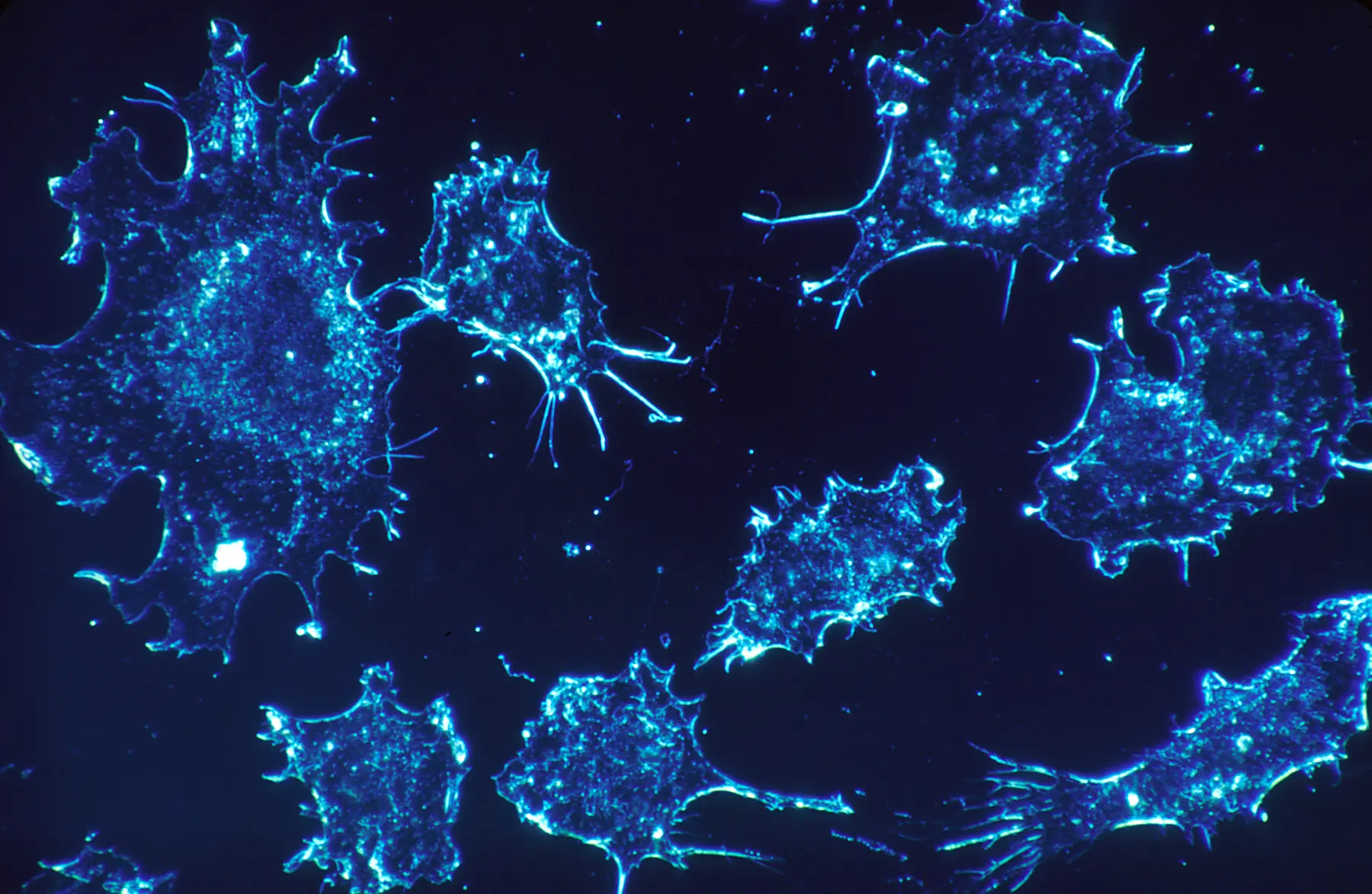
Cancer begins when genetic changes disrupt the systems that normally control how cells grow, divide, repair, and die. But the exact cells involved—and the changes inside them—can be very different from one cancer to another.
01 / A FAMILY OF DISEASES
One word. Many biological stories.
The National Cancer Institute describes cancer as a collection of related diseases. Some produce solid tumors; blood cancers such as leukemia generally do not. Some grow slowly, while others behave more aggressively. That variety is why a single symbol can represent solidarity, but cannot explain the disease itself.
Understanding cancer starts by asking a more precise question: which cancer, beginning in which kind of cell?
02 / WHERE IT BEGINS
The starting point keeps its name.
Cancers are usually named for the organ or tissue where they first formed. If a cancer later spreads, it is still identified by its original site. A cancer that began in the lung remains lung cancer even if cells are later found elsewhere.
This distinction matters because cells usually keep important features of their tissue of origin. Those features help clinical teams classify the disease and select useful tests.
03 / MAJOR GROUPS
Broad families describe the cells involved.
Covering and lining cells
Begins in epithelial cells found on body surfaces and inside many organs.
Bone and soft tissue
Begins in tissues such as bone, muscle, fat, blood vessels, or connective tissue.
Blood-forming tissue
Begins in tissue such as bone marrow and usually does not form a solid tumor.
Immune-system cells
Begins in lymphocytes, cells that are part of the immune system.
Other broad groups include multiple myeloma, melanoma, and tumors of the brain and spinal cord. Each group contains further types and subtypes.
04 / WHY SUBTYPE MATTERS
Location is the first clue, not the last.
Two cancers that begin in the same organ can still differ in their microscopic appearance, genes, proteins, stage, and response to treatment. Pathology and biomarker testing can add these layers of detail.
This is why there is no universal cancer treatment. Care is built around the cancer’s identity and extent, along with the person’s health and goals.
SOURCES / LEARN MORE
Continue with trusted information.
NCIWhat Is Cancer?↗NCICancer Types↗General education only. This article does not diagnose cancer or replace guidance from a qualified health professional.